Why Liverpool Businesses Need Faster Websites in 2026
Why Liverpool businesses need faster websites in 2026, with practical speed, mobile, Core Web Vitals and local SEO fixes that help turn visitors into enquiries.

A customer searches "emergency plumber Liverpool" on their phone.
Your website appears.
Good start.
They tap it.
Then they wait.
One second.
Two seconds.
Three seconds.
Gone.
That is the brutal truth about slow websites. Most lost customers do not send a polite message explaining why they left. They do not say, "I nearly booked, but your homepage moved like it was stuck in Mersey tunnel traffic."
They just disappear.
And in 2026, that matters more than ever.
Your website is no longer just a digital business card. It is often your first impression, your trust signal, your sales pitch, and your lead filter all rolled into one. If it is slow, clunky, confusing, or awkward on mobile, it can quietly cost you enquiries every single week.
For Liverpool businesses, that is a problem worth fixing.
Your website is often the first real impression
Before someone calls your business, visits your shop, books a table, or asks for a quote, they usually check your website.
That means your site is doing a job long before you ever speak to a customer.
If it loads quickly, looks modern, and tells people clearly what you do, that builds confidence. If it stutters, jumps around, or hides the important info under vague marketing fluff, trust drops fast.
People make snap judgments online. Fair or not, they do.
A slow site can make a good local business feel outdated. A clean, fast site can make a smaller business look sharp, capable, and trustworthy.
That first impression is doing more heavy lifting than many business owners realise.

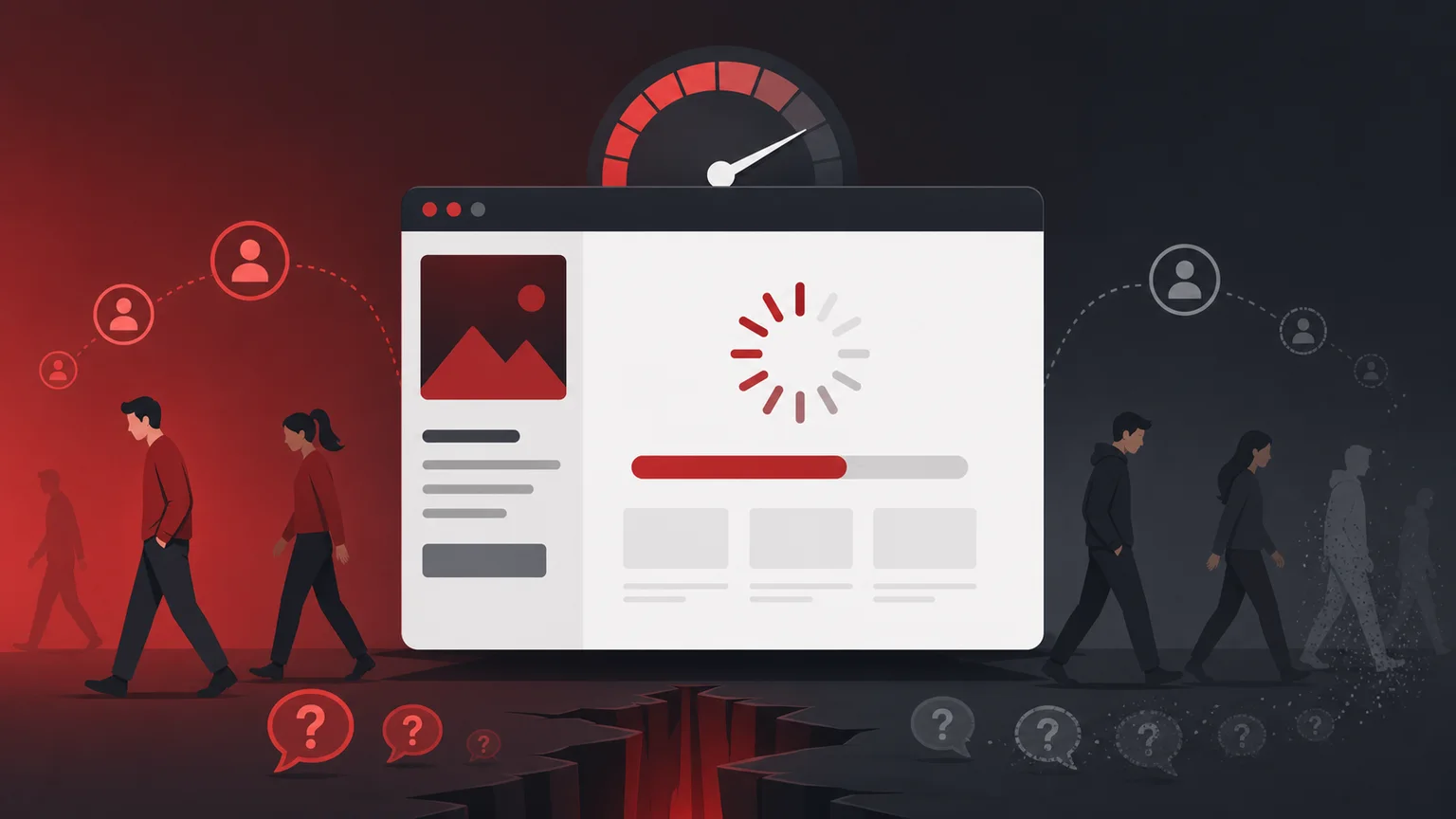
Slow websites lose customers before you even know they arrived
Here is the annoying part.
A slow website often does not create an obvious problem. It creates an invisible one.
You do not get an email saying your site is too slow. You do not get a missed call with a note attached saying, "Would have hired you if the page loaded properly."
You just get fewer enquiries.
Fewer clicks.
Fewer forms.
Fewer calls.
And because it is invisible, many businesses blame the wrong thing. They blame the economy, the season, Google, Facebook, or "people just messing about online."
Sometimes those things matter.
But sometimes the real issue is much simpler.
The website is getting in the way.
If a customer has to wait too long, scroll too hard, or think too much, many of them will leave. That is not personal. It is just how people behave online now.
Especially on mobile.
Especially when they are busy.
Especially when they want a quick answer.
A slow website is not just a technical issue. It is a sales issue.
Mobile speed matters more than most business owners think
A lot of business owners test their own website from a laptop in the office, on good Wi-Fi, with half the site already cached.
That is not how customers behave.
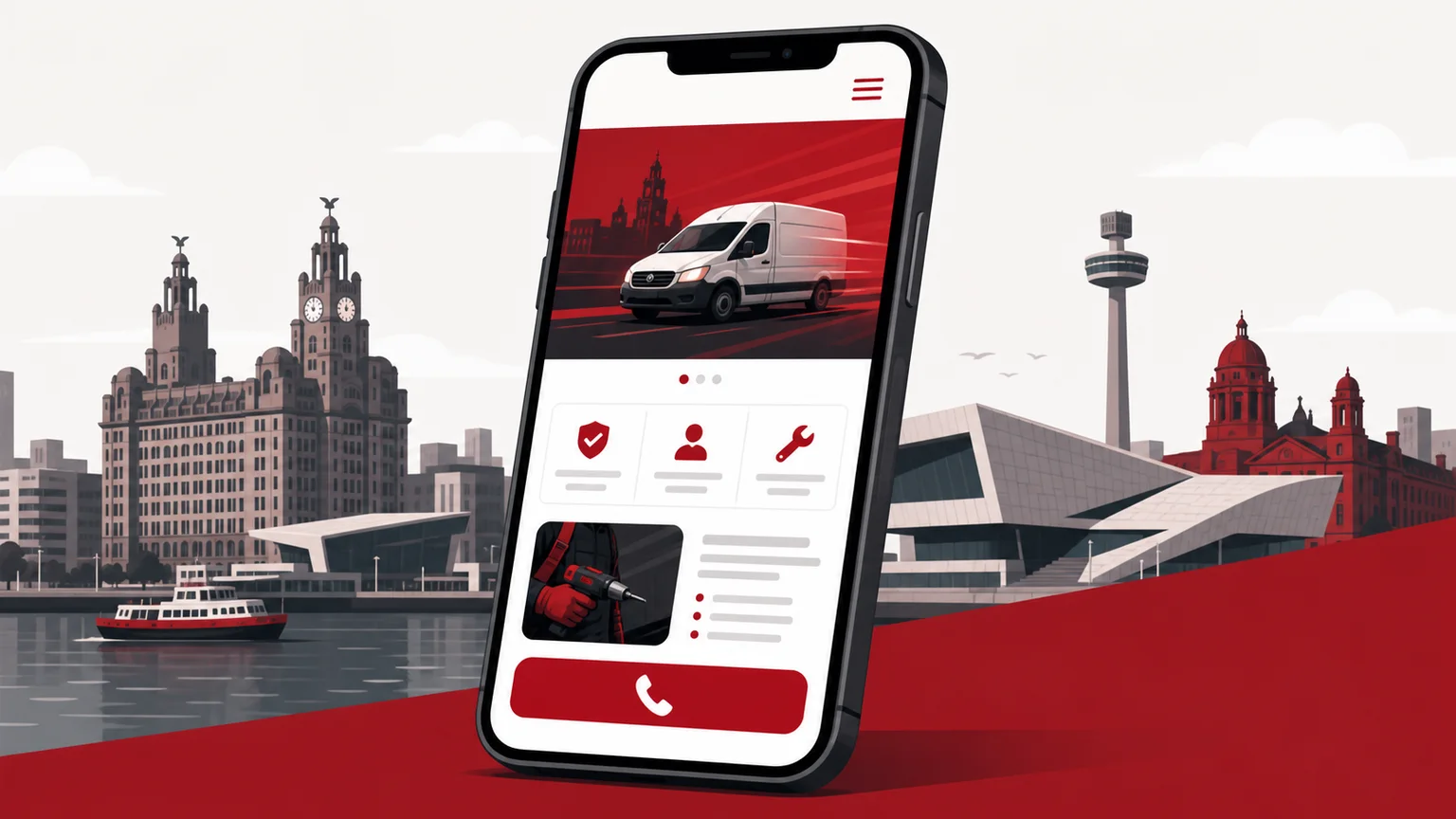
Your customer might be checking your site while walking through town, sitting in a van, waiting at school pickup, or quickly comparing options before making a call.
They are probably on a phone.
They may be on average mobile signal.
They may have zero patience.
That changes everything.
A site that feels acceptable on desktop can feel painfully slow on a mobile connection. Tiny buttons become awkward. Huge images take forever. Popups get in the way. Menus become annoying. Forms feel like homework.
If your website does not work quickly and cleanly on mobile, you are making life harder for the very people most likely to contact you.
Liverpool customers are not sitting down with a brew to study your homepage like it is a museum piece.
They want answers.
Fast.
Google cares about speed, but customers care first
Let's be sensible about this.
Website speed is not a magic switch that suddenly sends you to the top of Google. Anyone claiming that is overselling it.
Google still looks at relevance, content quality, local signals, page usefulness, trust, your Google Business Profile, and whether your page actually answers the search.
But speed still matters.
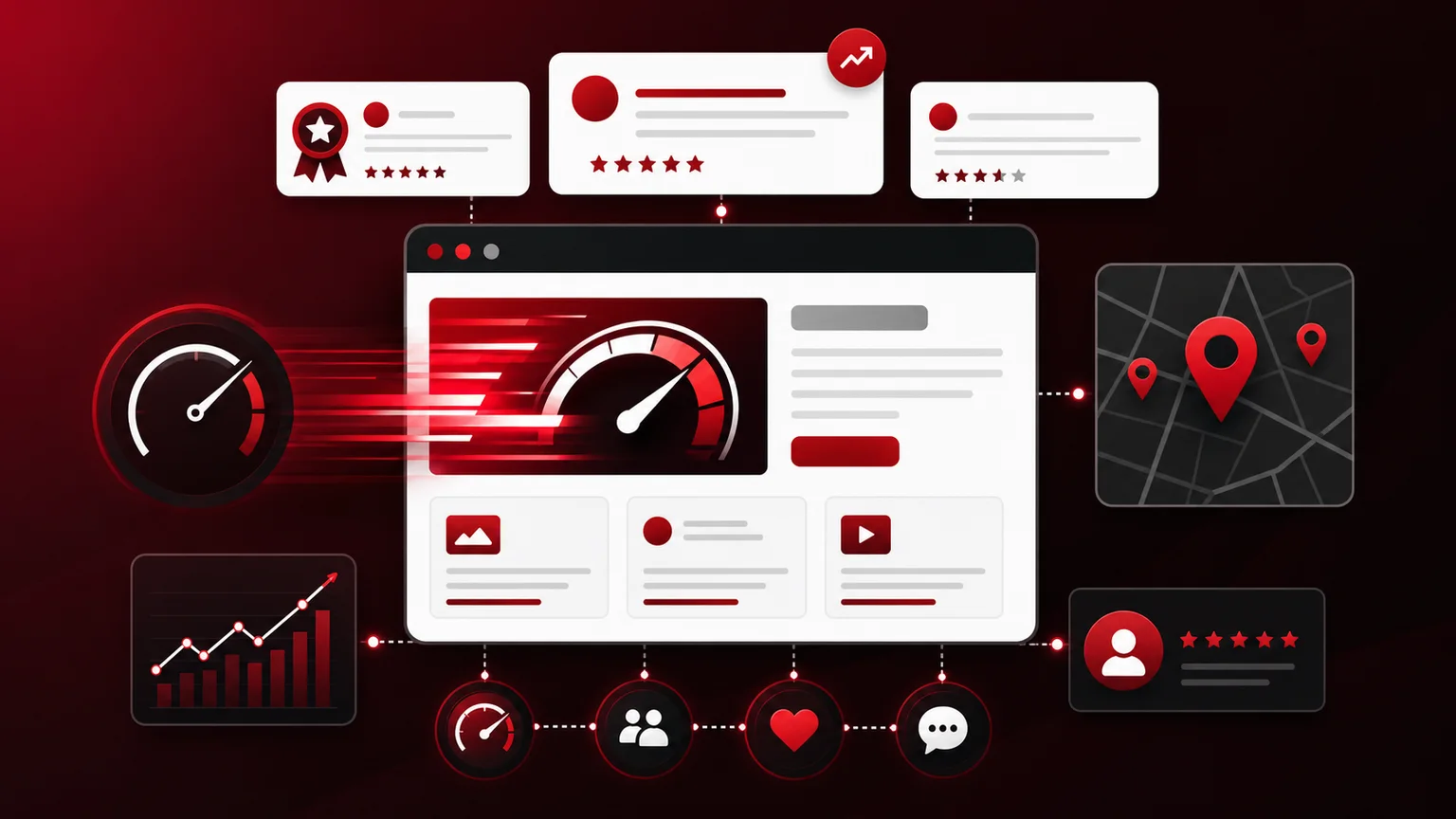
Google's Core Web Vitals guidance describes the metrics as a way to measure real-world user experience, including loading performance, responsiveness to user input, and visual stability. Google Search Central also says site owners should aim for good Core Web Vitals as part of better user experience and Search success.
That does not mean speed replaces good content.
It means speed supports everything else.
A fast website helps your marketing work properly. A slow website puts mud in the engine.
Good SEO is not just about keywords. It is about helping people find the right answer quickly and trust what they see when they land.
That is where speed becomes important.
Not because Google is the only thing that matters.
Because real people matter first.
Local SEO needs more than just a pretty website
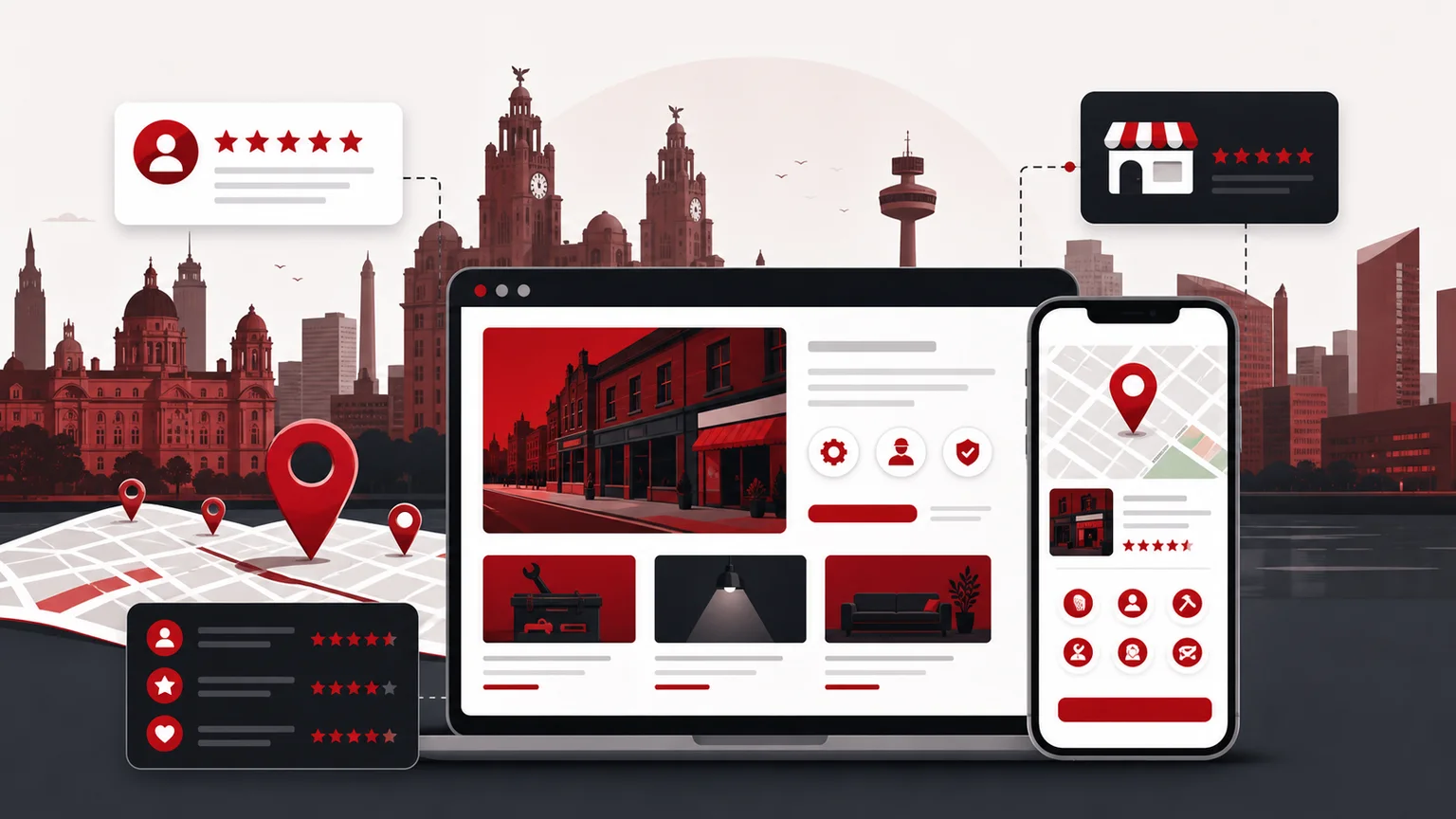
For Liverpool businesses, local SEO is where this gets even more important.
If someone searches for a plumber, cafe, solicitor, roofer, locksmith, accountant, dog groomer, gym, or restaurant nearby, Google is trying to work out which result is most useful.
Google's local ranking guidance says local results are mainly based on relevance, distance, and prominence.
That means your website needs to make things clear.
What do you do?
Where do you work?
Can people trust you?
Do you have useful service pages?
Does your Google Business Profile match what your website says?
Are your reviews helping?
Can customers contact you easily?
A fast website alone will not win local SEO.
But a slow, vague, confusing website can absolutely hold it back.
Think of it like this:
Your Google Business Profile gets people to the door.
Your website helps convince them to knock.
If the page takes too long to load, they may never get that far.
For more on this side of things, read our guide to Google Business Profile for Liverpool trades.
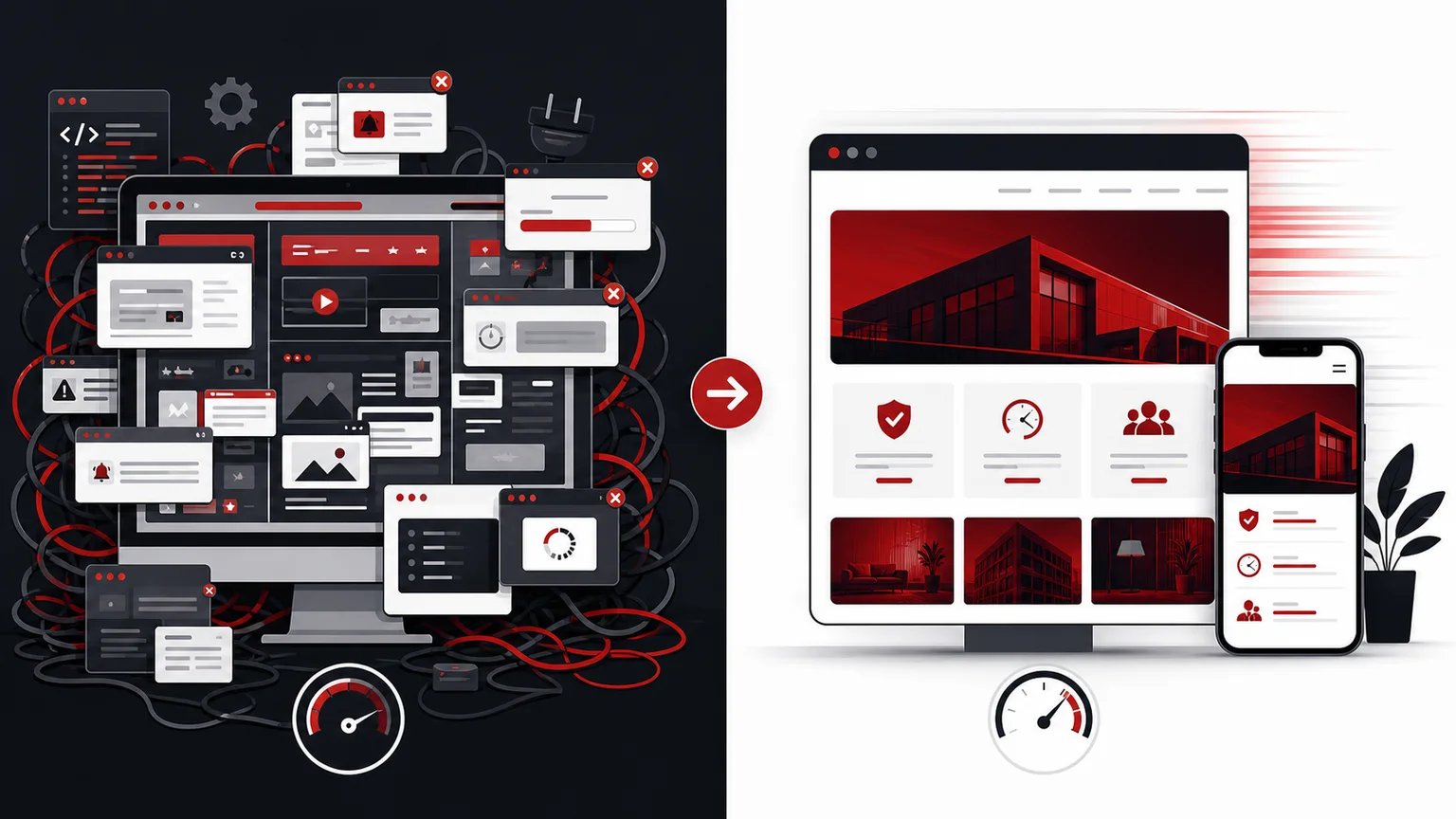
The problem with bloated website builders
Here is my honest opinion.
A lot of websites are not broken because the business owner has done something wildly wrong.
They are broken because the tools are bloated, overcomplicated, or set up badly.
Website builders and template systems can be useful. For some people, they are the right starting point.
But too often, a simple small business website ends up weighed down by page builders, plugins, huge images, sliders nobody asked for, tracking scripts, animations, popups, cookie banners, and random extras bolted on over time.
It becomes digital loft clutter.
What should be a clean, focused business website turns into a slow pile of moving parts.
That is when performance drops.
Editing becomes frustrating.
Ownership gets fuzzy.
You are paying every month, but you do not really control the platform, the code, or the long-term flexibility. You are renting a setup that may not even be helping you win business.
That is why simple, fast, well-built websites often outperform flashy ones.
Not because they are boring.
Because they get to the point.
Fast websites feel more trustworthy
This bit matters more than many people expect.
A fast website feels professional.
It feels cared for.
It feels current.
It feels easier to trust.
That does not mean your website needs to look flashy or futuristic. It just needs to feel smooth, clear, and competent.
When someone lands on your homepage and everything works quickly, they relax. They can focus on what you do instead of fighting the page.
That is especially important for service businesses.
If someone needs a solicitor, plumber, locksmith, roofer, or local consultant, they are looking for reassurance. They want to feel like they are in safe hands.
A sluggish, messy website does not exactly scream reliability.
Fast websites reduce friction.
And lower friction usually means more enquiries.

What a faster Liverpool business website actually needs
Good news.
You do not need to rebuild your site into some Silicon Valley spaceship.
You need the basics done properly.
A faster business website usually comes down to a few important things.
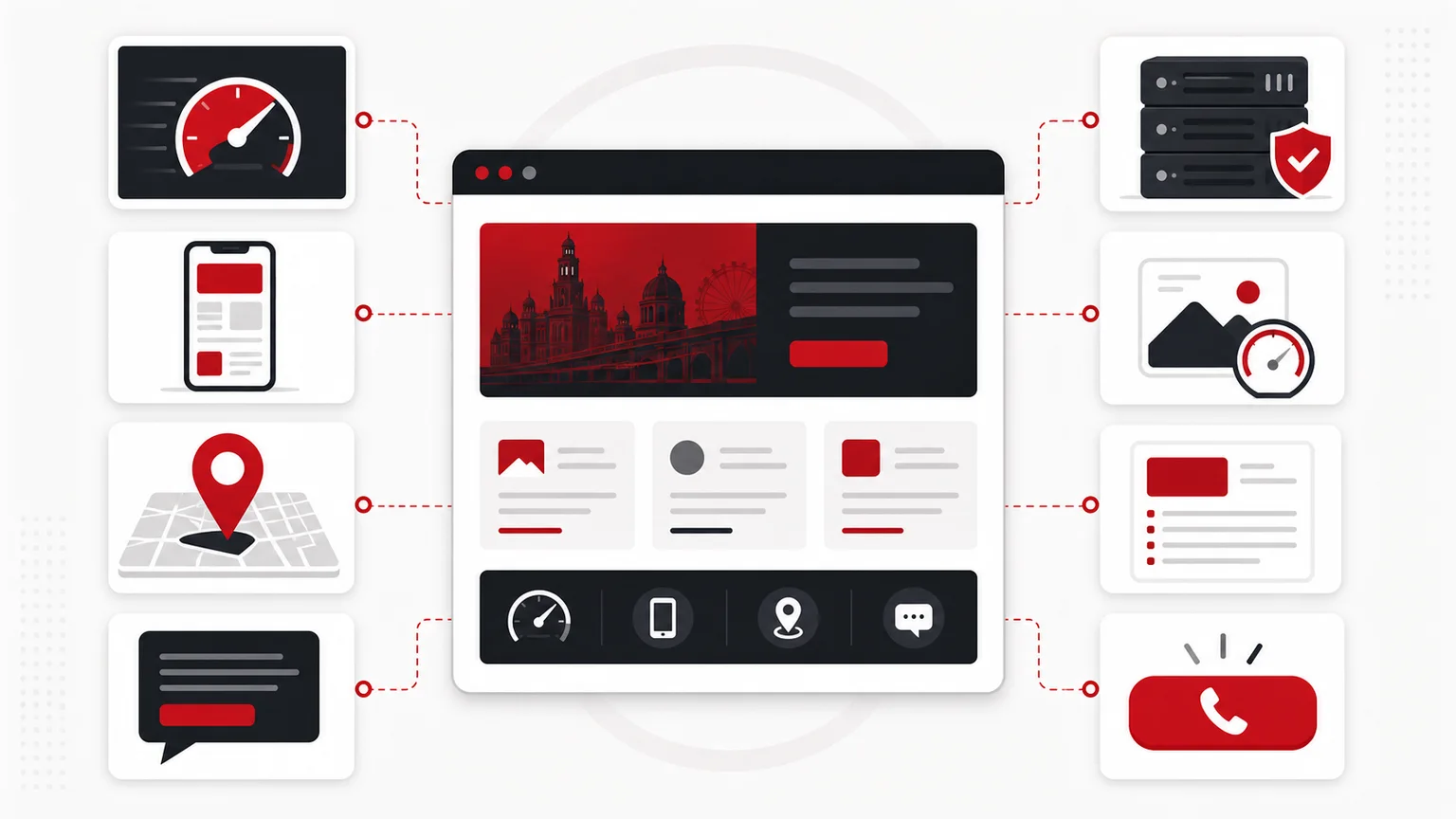
1. Clear messaging
Your homepage should quickly explain what you do, who you help, and where you work.
Not after six scrolls.
Not hidden under a vague slogan.
Immediately.
Bad homepage message:
Helping brands unlock digital possibilities.
Better homepage message:
Fast websites for Liverpool businesses that want more enquiries.
See the difference?
One sounds like it came out of a corporate fridge.
The other tells people what you actually do.
We wrote more about this in Stop Wasting Money on Website Redesigns.
2. Compressed images
Huge image files are one of the quickest ways to slow down a website.
This is common on small business sites. Someone uploads a massive photo straight from a phone or camera, then the website tries to load it like it is a billboard.
Your customers do not need a 7MB image of your van.
They need the page to load.
3. Lightweight code
Clean builds usually perform better than bloated page-builder setups.
That does not mean every website needs to be custom coded from scratch. But it does mean the site should not be carrying unnecessary scripts, plugins, and features that add weight without adding value.
If it does not help the customer or the business goal, question why it is there.
4. Mobile-first layout
Mobile-first means the phone experience is not an afterthought.
Buttons should be easy to tap.
Text should be easy to read.
The menu should be simple.
Contact details should be obvious.
Forms should not feel like applying for a mortgage.
5. Strong calls to action
If someone is ready to contact you, do not make them hunt.
Your website should clearly guide people toward the next step.
That might be:
- Call now
- Request a quote
- Book a table
- Get a free website check
- Send an enquiry
- View services
A good call to action does not bully people.
It helps them move.
6. Useful service pages
One vague services page usually is not enough.
If you are a Liverpool electrician, you probably need separate pages for things like emergency callouts, fuse board upgrades, rewires, landlord certificates, and inspections.
If you are a restaurant, you may need pages or sections for menus, private bookings, events, opening times, and location.
If you are a solicitor, you may need clear pages for each legal service.
Specific pages help people.
They also help Google understand what you offer.
7. Local relevance
If Liverpool and Merseyside are your market, your website should make that obvious.
That does not mean stuffing "Liverpool" into every sentence like a robot with a postcode obsession.
It means naturally showing:
- Where you are based
- Which areas you serve
- Local examples
- Local trust signals
- Local reviews
- Local service pages where useful
Google needs clarity.
Customers need confidence.
8. Good hosting
Even a decent website can feel poor if the hosting is weak.
Cheap hosting can be fine for tiny projects, but if your site is meant to generate leads, it should be treated like a business asset.
Fast hosting, clean code, and optimised images all work together.
Ignore one, and the whole thing can suffer.
9. Fewer unnecessary extras
Not every website needs animations, sliders, popups, chat widgets, newsletter boxes, review widgets, and three different tracking tools.
More stuff does not always mean more value.
Sometimes more stuff just means more waiting.
The best business websites are usually focused.
Clear message.
Fast load.
Easy navigation.
Strong trust signals.
Obvious next step.
That is the game.
Three quick fixes you can make this week
Picture walking down Bold Street looking for a quick bite. You pull on a café door and it doesn't budge. You wait a few seconds, nobody comes, so you walk to the next place instead.
That is exactly what happens online. If someone in South Liverpool searches for a local service on their phone and your page does not open fast, they tap back and try a competitor.
You do not need an agency or a coding course to fix that. Here are three things you can do yourself this week.
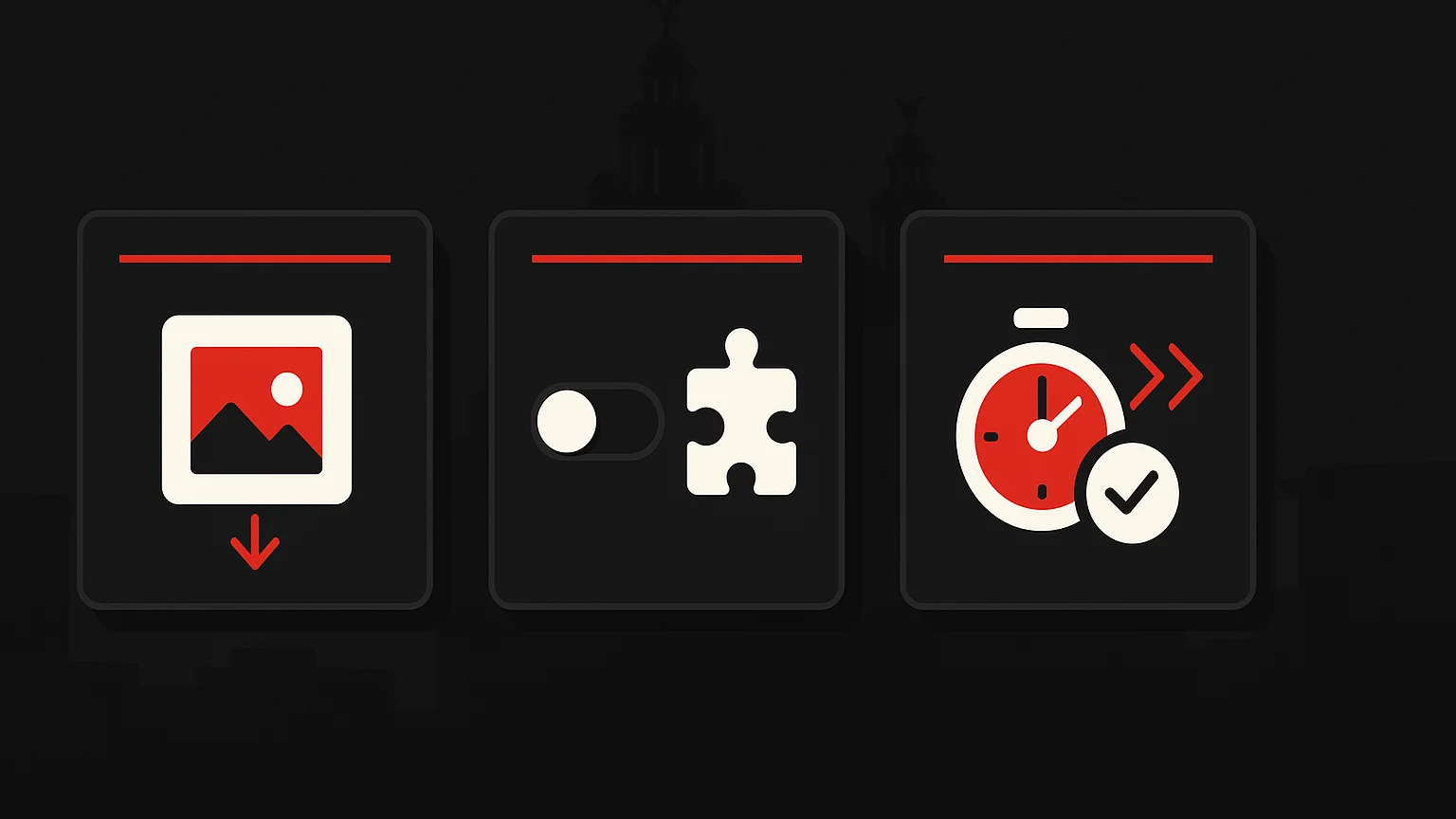
Fix 1: Shrink your photos before uploading
Huge, uncompressed photos are the most common reason small business websites run slow. A photo straight off a phone or from a photographer can be several megabytes. Loading that on your homepage is like trying to drive a lorry down a tight street in the Baltic Triangle. Everything backs up behind it.
- Save website images as JPEG or WebP, not PNG or RAW
- Run photos through a free tool like TinyPNG before uploading, which can cut file size by up to 80% with no visible quality loss
- Aim to keep each image under 200KB
Fix 2: Delete plugins and tools you no longer use
If your site runs on WordPress or Wix, you have probably added a few extras over the years. An Instagram feed, a popup form, a gallery plugin you tried once. Even switched off, some of these still run code in the background, slowing your page down like the Rocket at rush hour.
- Log into your website dashboard
- Open your Plugins or Apps list
- Deactivate and delete anything you haven't used in the last three months
- Keep only what your business actually needs
Fix 3: Turn on caching for repeat visitors
The first time someone visits your site, their phone downloads every logo, photo, and font from scratch. Caching saves a copy of that on their device, so their next visit loads almost instantly instead of downloading everything again.
- Check your hosting dashboard. Many hosts have a simple one-click caching option
- On WordPress, a free plugin like WP Super Cache turns on basic caching in a couple of clicks
None of this needs technical know-how. It needs twenty minutes and a bit of housekeeping.
A simple Liverpool example
Imagine a local electrician in Liverpool.
Their current website has one generic homepage, a slow image slider, tiny contact details, and no clear service pages.
It technically exists.
But it does not really help the customer.
Now imagine the improved version.
The site loads fast.
The homepage says exactly what they do.
The phone number is visible right away.
There is a clear emergency electrician page.
There are proper service pages for rewires, fuse boards, landlord certificates, and inspections.
There are trust signals, local areas covered, reviews, and a simple quote form.
That second version is not just better looking.
It is easier to use.
Easier to trust.
Easier to understand.
Easier to convert.
That is what a lot of small business websites are missing.
Not flashy design.
Clear purpose.
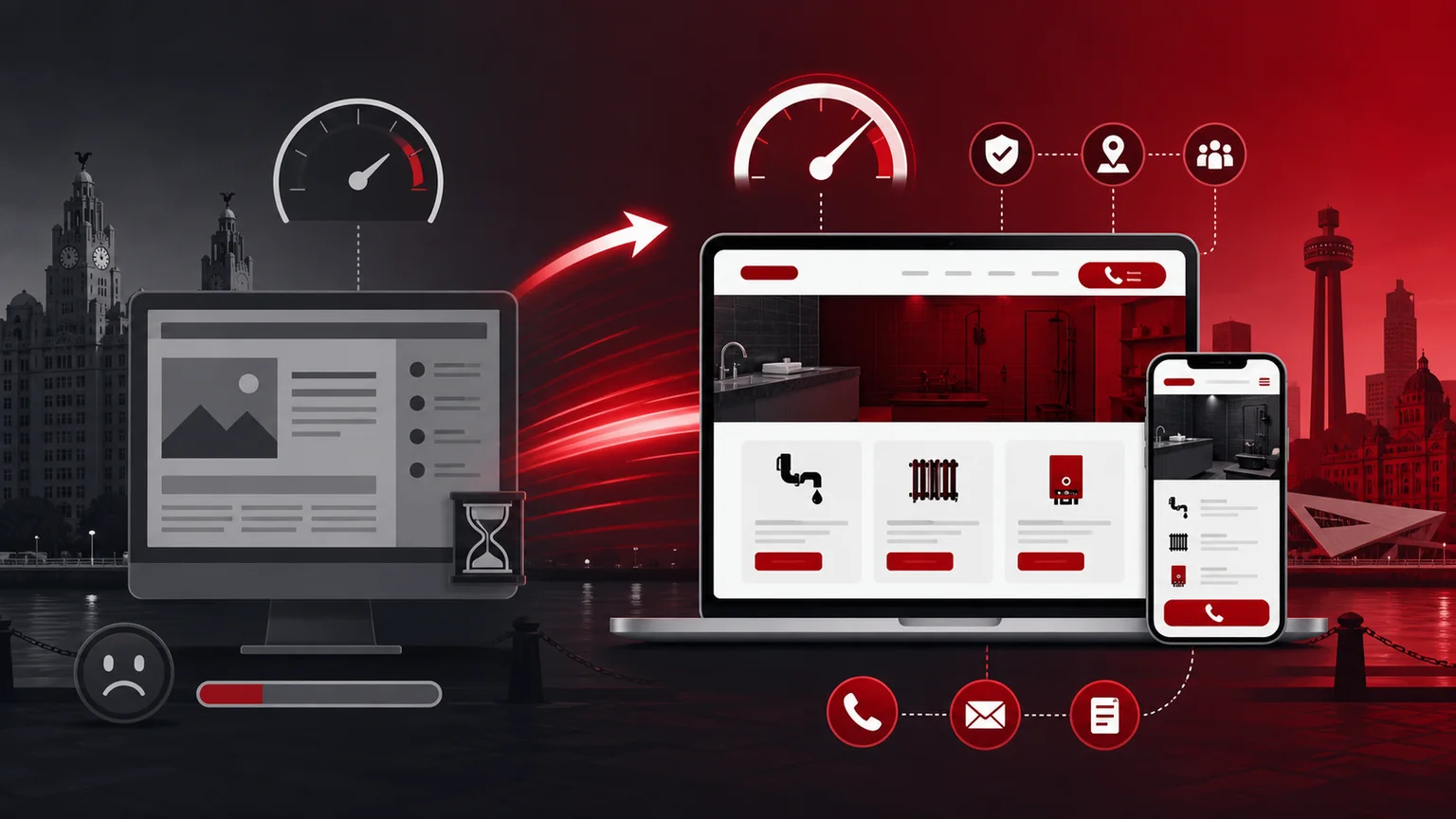
Liverpool businesses are competing in a serious digital economy
Liverpool is not some sleepy local market where having any old website will do.
The Liverpool City Region has a serious and growing digital and creative economy. Invest Liverpool City Region describes the area as having thousands of digital and creative companies and more than 51,000 professionals, including freelancers.
That matters because customer expectations are rising.
People are used to fast apps, clean booking systems, instant maps, mobile payments, quick forms, and smooth online experiences.
Then they land on a slow small business website from 2014 and wonder what happened.
Harsh?
Maybe.
True?
Absolutely.
Local businesses are not just competing with the shop down the road anymore. They are competing with the level of digital experience customers now expect everywhere.
That does not mean every local business needs a massive website.
It means the website needs to be fast, clear, useful, and trustworthy.
What you should check on your website today
If you want a quick reality check, do this today.
Open your own website on your phone using mobile data, not office Wi-Fi.
Then ask yourself:
- Does it load quickly?
- Is it obvious what the business does?
- Is the phone number easy to find?
- Can you navigate it without effort?
- Does it feel modern and trustworthy?
- Are your services clearly explained?
- Does it mention Liverpool or your service area properly?
- Is there an easy next step for the customer?
- Does the homepage still make sense if someone only gives it five seconds?
If the answer to several of those is "not really," your website probably needs attention.
Not panic.
Just attention.
And honestly, that is good news.
Because most of these issues are fixable.
You can also use Google Search Console's Core Web Vitals report to check real-world performance data from actual users.
Final thought
A faster website is not about showing off.
It is about removing excuses for people to leave.
That is the real value.
In 2026, Liverpool businesses do not need heavier websites, more gimmicks, or extra digital nonsense.
They need websites that load fast, work well, look trustworthy, and help customers take action.
Because when your site gets out of the way, your business has a much better chance to shine.
And that is the whole point.
Want a free website check?
Want to know if your website is helping or hurting your enquiries?
L1 Web Tips offers a free website check for Liverpool businesses.
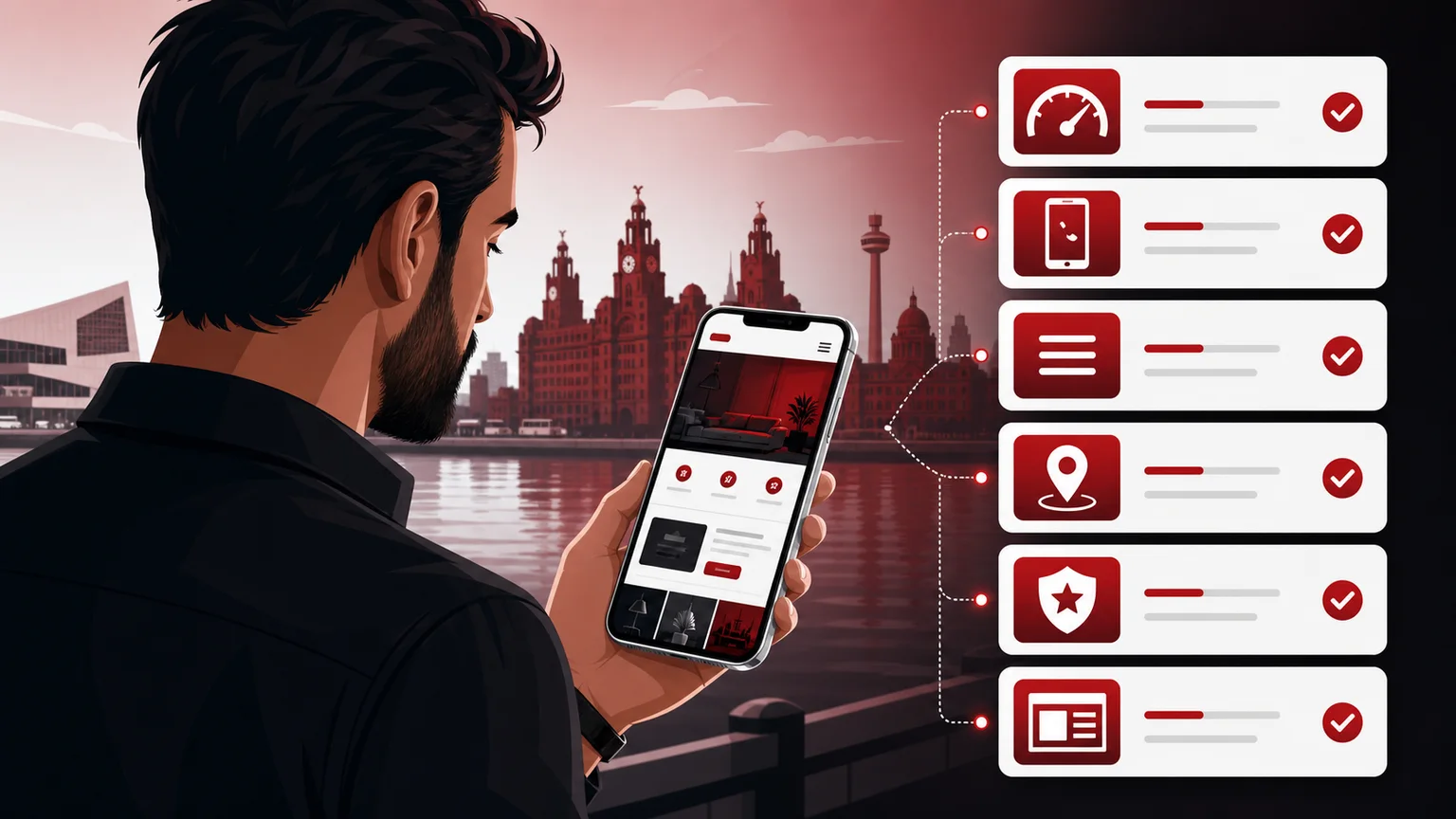
We'll look at:
- Website speed
- Mobile usability
- Homepage clarity
- Local SEO basics
- Contact points
- Service page structure
- Obvious fixes that could help you get more enquiries
No jargon.
No scare tactics.
Just a clear look at what is working, what is not, and what to fix next.
FAQ
Why does website speed matter for Liverpool businesses?
Website speed matters because customers expect pages to load quickly, especially on mobile. If your site is slow, people may leave before they call, book, or send an enquiry.
Does a faster website help with Google rankings?
A faster website can support SEO because it improves user experience. However, speed alone is not enough. Google also looks at relevance, useful content, local signals, trust, and other ranking factors.
How can I test if my website is slow?
Open your website on your phone using mobile data. Check how long it takes to feel usable. You can also use tools like Google Search Console's Core Web Vitals report to review real-world performance data.
What makes a small business website faster?
Common improvements include compressing images, using better hosting, reducing unnecessary plugins, simplifying code, improving mobile layout, and removing features that do not help customers.
Do Liverpool businesses need local SEO as well as a fast website?
Yes. A fast website helps, but local SEO also needs clear service pages, local relevance, reviews, Google Business Profile optimisation, and trust signals. Google says local ranking is influenced by relevance, distance, and prominence.
What is the quickest way to speed up my website myself?
Three things make the biggest difference with no coding needed: compress your photos before uploading (a free tool like TinyPNG can shrink them by up to 80%), delete plugins or apps you haven't used in three months, and turn on caching through your host's dashboard or a free plugin like WP Super Cache.
Want to know how slow your site actually is?
Run it through our website health check and you will see your loading time and what is dragging it down.
If the site is past saving, web design for Liverpool businesses starts at £395 for a one-page build. Either way, get in touch and we will tell you which one you actually need.
Get help
Want this done for you?
We help Liverpool businesses with web design, local search, and content. Honest work, fixed prices.
More articles
 SEO
SEOLiverpool Local SEO Guide: Get Found by More Local Customers
A practical local SEO guide for Liverpool businesses. Learn how to improve Google Maps visibility, improve your website, build trust, get reviews, and turn local searches into real enquiries.
 SEO
SEO10 Free SEO Tools for Liverpool Businesses: What is Worth Your Time?
Don't waste money on expensive SEO software. Here are the 10 free tools we actually use in our L1 office, ranked by how easy they are for a local business to use.
 SEO
SEOHow to Win More Liverpool Jobs with Local SEO (The 5-Step Plan)
Is your Liverpool business invisible on Google? Here is a practical 5-step local SEO plan to help you show up where your customers are searching.