“It takes just 50 milliseconds for a visitor to judge your site — and colour is the first thing they notice.”
Before a headline is read or a button is clicked, your colour choices are already influencing how users feel, what they focus on, and whether they trust you enough to take action. This is the power of colour psychology — the science of using colour to shape perception and behaviour.
In web design, colour is more than an aesthetic choice. It’s a strategic tool that can:
- Build trust before a single word is read
- Guide the user’s eye to the most important elements
- Trigger emotional responses that align with your brand goals
- Increase conversions by making calls‑to‑action impossible to ignore
1. Why Colour Psychology Matters in Web Design
Colour is processed by the brain faster than text or images, meaning it sets the tone for the entire user experience.
Key reasons it matters:
- First impressions: Up to 90% of initial judgments about a product or brand are based on colour alone.
- Emotional priming: Colours can evoke trust, urgency, calm, or excitement before a user reads a single word.
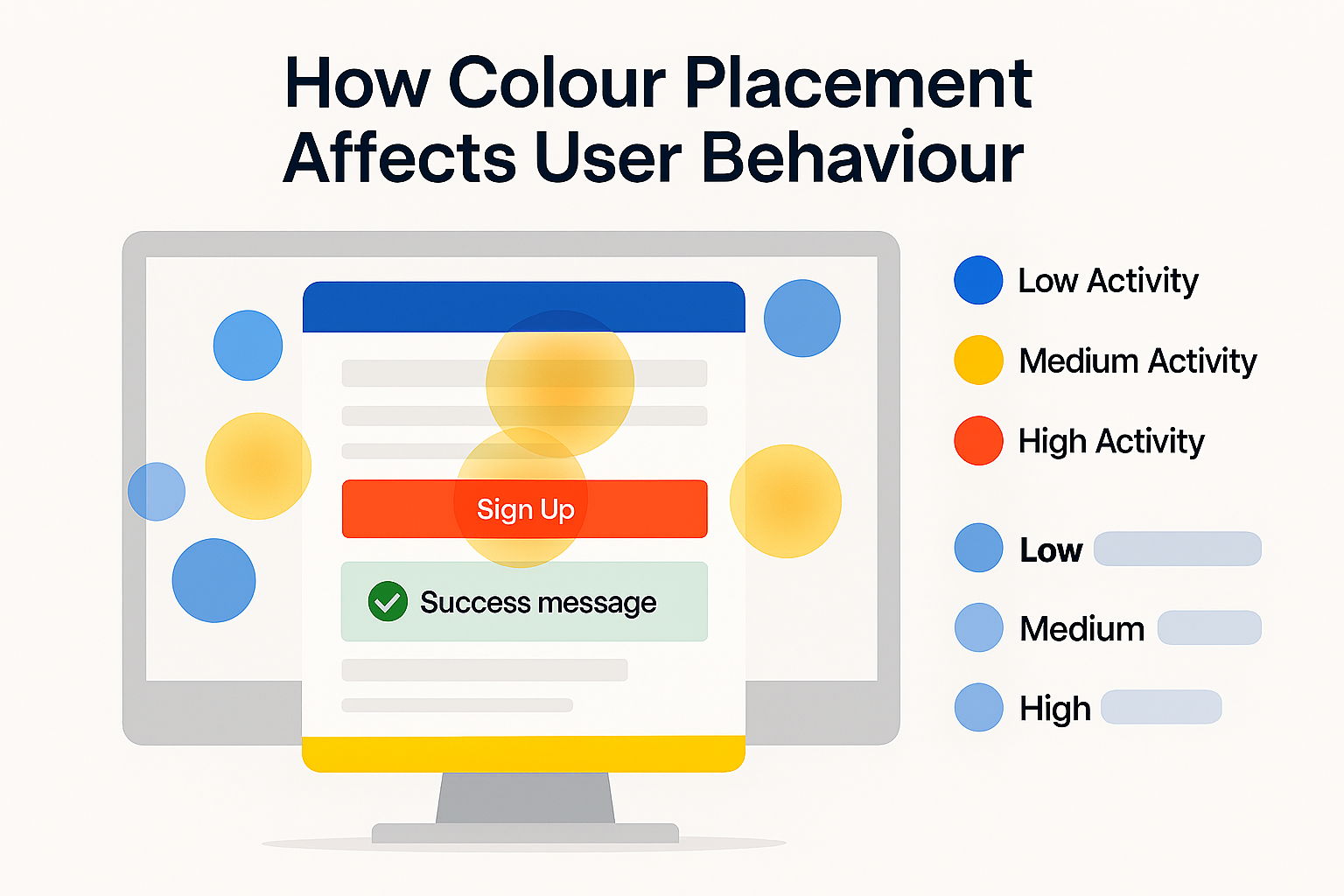
- Behavioural influence: Strategic use of colour can guide the eye, highlight key actions, and improve click‑through rates.
- Brand consistency: A consistent palette across your site, social media, and marketing materials builds recognition and loyalty.
💡 : Look at your homepage right now — what’s the dominant colour? Does it match the feeling you want visitors to have?
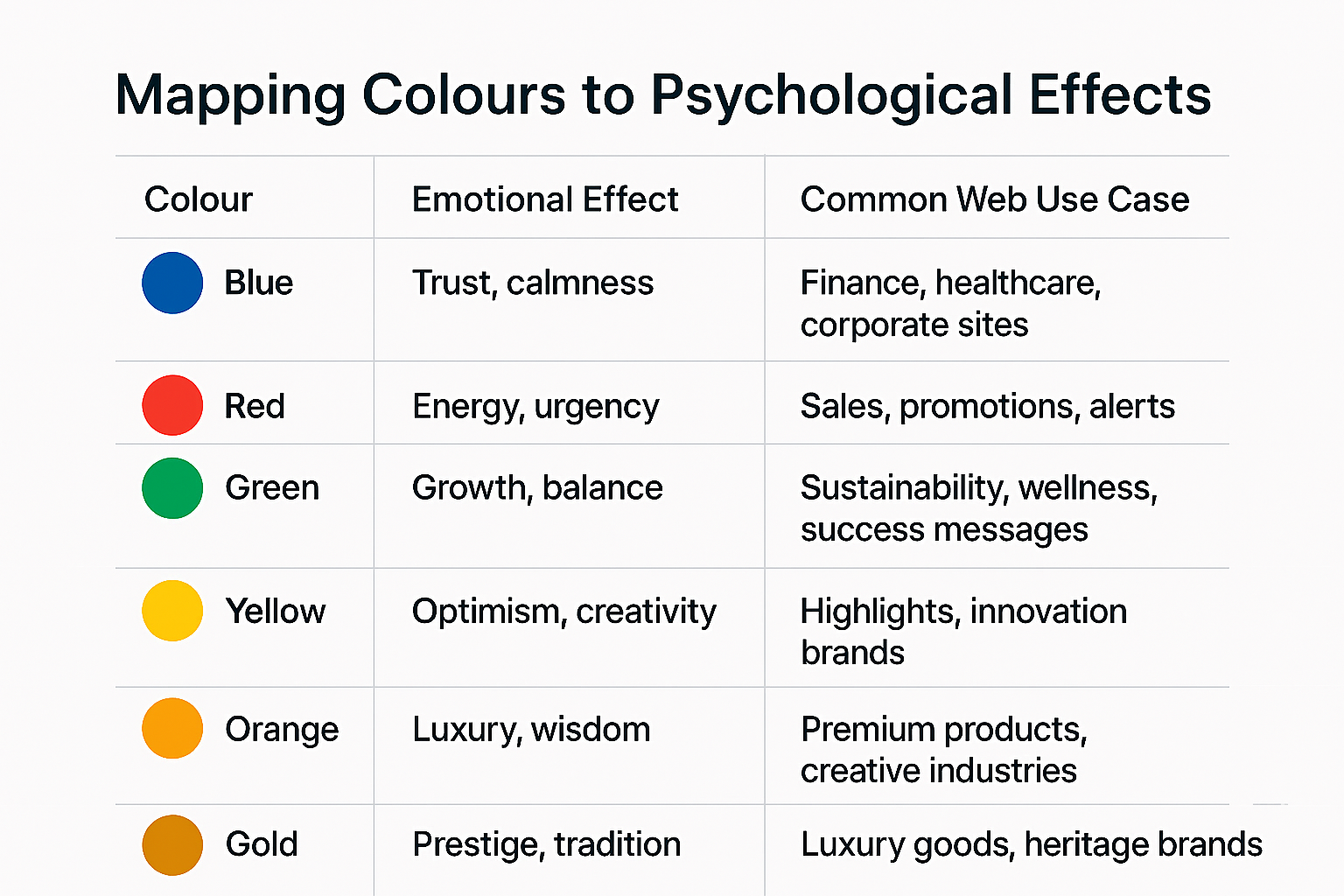
2. Mapping Colours to Psychological Effects
| Colour | Emotional Effect | Common Web Use Case | Example |
|---|---|---|---|
| Blue | Trust, calmness | Finance, healthcare, corporate sites | PayPal, NHS |
| Red | Energy, urgency | Sales, promotions, alerts | Coca‑Cola, YouTube |
| Green | Growth, balance | Sustainability, wellness, success messages | Whole Foods, Spotify |
| Yellow | Optimism, creativity | Highlights, innovation brands | IKEA, Snapchat |
| Purple | Luxury, wisdom | Premium products, creative industries | Cadbury, Hallmark |
| Orange | Friendliness, enthusiasm | Sign‑ups, community platforms | SoundCloud, HubSpot |
| Gold | Prestige, tradition | Luxury goods, heritage brands | Rolex, National Geographic |
Pro tip: The same colour can have different effects depending on shade and saturation. A deep navy blue feels corporate and serious, while a bright sky blue feels fresh and friendly.
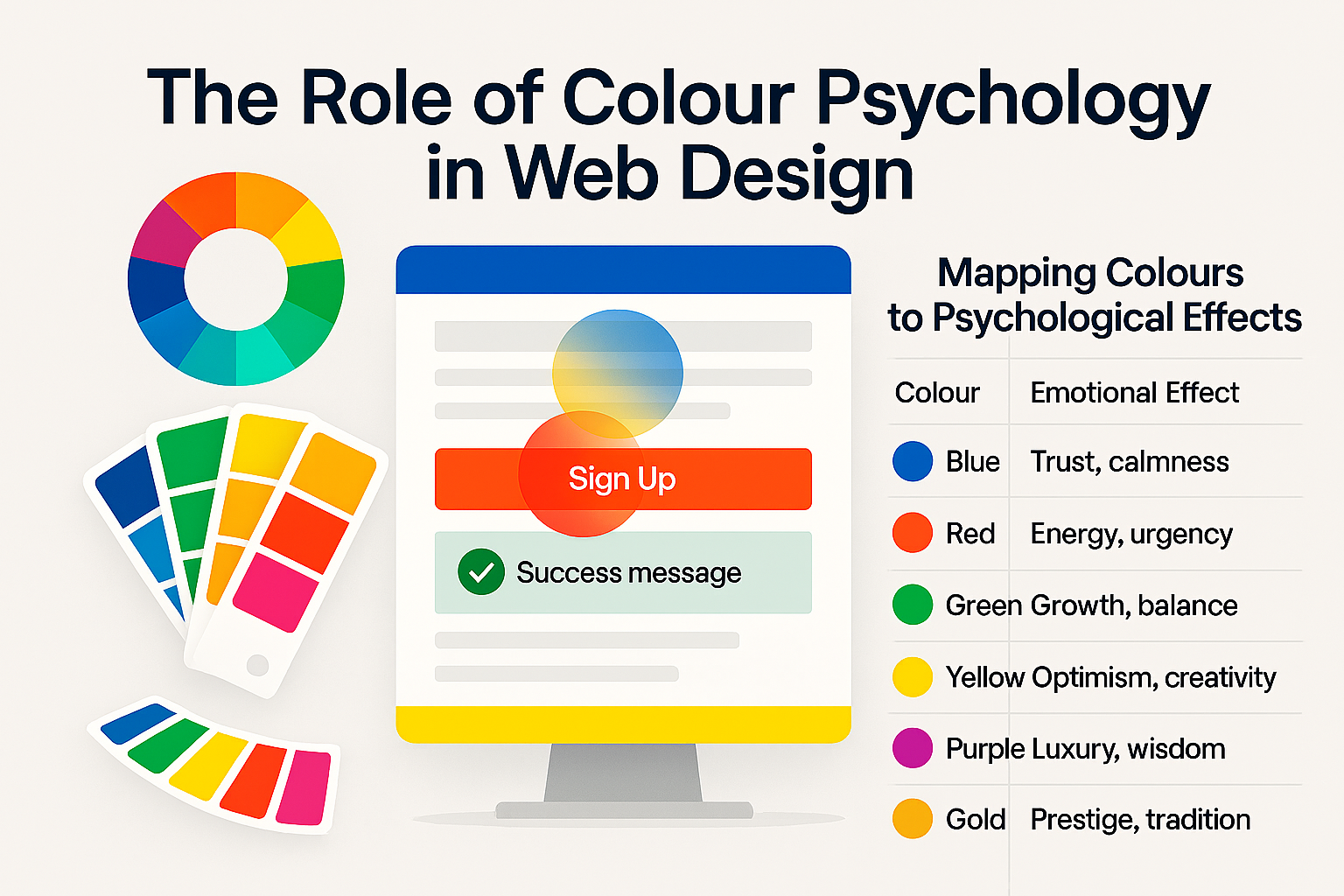
3. How to Apply Colour Psychology in Web Design
- Define your brand’s emotional goal
Decide what you want users to feel — safe, excited, inspired — and choose colours that evoke that emotion. - Use contrast to guide attention
Make CTAs stand out with a colour that contrasts your primary palette. For example, a red button on a predominantly blue site draws the eye instantly. - Create a visual hierarchy
Use colour intensity and saturation to signal importance — brighter for key actions, muted for background elements. - Test and measure
A/B test different button colours or background shades to see which drives more conversions. Even small changes can have measurable impact. - Ensure accessibility
Meet WCAG contrast standards so all users can read and interact comfortably.
💡 : Run your site through a contrast checker — if your text fails, fix it today.
4. Best Practices for Colour‑Driven Conversions
- Limit your primary palette to 2–3 core hues for consistency.
- Use accent colours sparingly to highlight key elements.
- Keep brand consistency across all platforms — website, social, email.
- Align colours with industry expectations but add a twist to stand out.
- Always validate with real‑user feedback before rolling out changes.
- Consider colour psychology in context — a colour that works for a luxury brand may not suit a budget‑friendly e‑commerce store.
5. Tools to Help You Choose the Right Palette
- Coolors Palette Generator — Build harmonious palettes in seconds.
- Adobe Color — Explore colour harmonies and trends.
- WCAG Contrast Checker — Ensure text is readable for all users.
Conclusion
Colour psychology is more than a design trend — it’s a strategic advantage. By understanding how different hues influence perception and behaviour, you can design websites that connect emotionally, guide users effortlessly, and convert more effectively.
Next step: Audit your site’s palette today. Ask yourself — are my colours working for me, or against me?