You’ve spent ten hours on your feet. Perhaps you finished a high-end kitchen fit in Allerton or rewired a Victorian terrace near Sefton Park. Now you’re home. Your boots are off, and the kettle’s just whistled. In the old days—say, fifteen or twenty years ago—your day ended there. Your work was done. A good job meant “scouse word of mouth” took care of the rest.
You’ve spent ten hours on your feet. Perhaps you finished a high-end kitchen fit in Allerton or rewired a Victorian terrace near Sefton Park. Now you’re home. Your boots are off, and the kettle’s just whistled. In the old days—say, fifteen or twenty years ago—your day ended there. Your work was done. A good job meant “scouse word of mouth” took care of the rest. A mate would mention your name at the local pub. Your diary then stayed full for six months. No computer needed. You were a master of your craft. In Liverpool, that was always enough to put food on the table and keep the van on the road.
However, today’s 2026 reality is different for the modern tradesman. The physical shift on-site is now only half the battle. Welcome to the “Double Shift.” You work with your hands from 8 to 5. Then, every evening, you must manage digital tasks. These tasks protect your reputation, chase your money, and keep the phone ringing. In Liverpool, everyone knows everyone. Your name is your currency. However, digital spaces trade that currency faster than a black cab on the Strand. If you neglect your digital presence, you lose work. Worse, you leave your lifelong reputation to strangers and algorithms.
The Shifting Sands of “Scouse Word of Mouth”
The Double-Edged Sword of Digital Reputation
Reputation in Liverpool has always centered on trust. We pride ourselves on looking out for our own. A plumber doing a great job on Smithdown Road? The whole street knows by Saturday. A joiner going above and beyond in Childwall? He becomes a local hero for the week. This traditional “word of mouth” has migrated, however. It moved from the pub bar stool and the garden fence to the smartphone screen. You might have finished your tiling or boiler installation. Meanwhile, someone likely posted in the Penny Lane Gossip or Liverpool Community Noticeboard. Local WhatsApp groups are also active. They ask: “Anyone know a reliable sparky who won’t charge the earth and actually turns up?”
This shift presents a double-edged sword. On one hand, a single glowing recommendation in a group with 20,000 local members can fill your calendar for a year. It acts like a digital megaphone for your hard work. On the other hand, these digital spaces prove incredibly hostile. A single “naming and shaming” post can travel swiftly through the city. This happens faster than twenty years of honest work. Such posts can be unfair, a misunderstanding, or even a flat-out lie. In the current 2026 environment, nearly half (48%) of all UK businesses report significant impact from negative online content or fake reviews. For a Liverpool sole trader or small family firm, this is more than a statistic. It poses a direct threat to your mortgage and your peace of mind.
A “silent” loss of work poses a real danger. You may never know when a potential customer *doesn’t* call you. This happens if they saw a disgruntled comment on an old Facebook thread. Therefore, reputation management becomes the first part of your double shift. You must be present in the online conversation. Otherwise, the conversation will happen without you. Genuine tradesmen now face high suspicion. The Liverpool Echo often issues “rogue trader” warnings. Customers remain on high alert. They actively seek reasons not to hire you. Prove you are one of the good ones before you even step foot through their front door. That crucial proof lives online.
Embracing the “Good” Digital: Efficiency and Professionalism
Beyond the Invoice Pad: Streamlining Your Admin
Promoting your work differs massively from managing it. For many Liverpool tradesmen, the digital skills gap significantly hinders their business growth. It also prevents them from simply reclaiming their weekends. We often observe highly skilled tradesmen still relying on old methods. They use paper invoice pads or scribble quotes on envelope backs. Chasing payments via text message on a Friday night remains common. This creates misery, adding ten hours of invisible work to their week. Crucially, they aren’t getting paid for this extra effort.
The city’s smartest outfits moved their admin to the cloud. They did this to protect their sanity and their bank balance. Using apps like QuickBooks or Xero goes beyond mere tech-savviness. It ensures professional survival. Send a professional, branded quote from your van outside the customer’s house. You will instantly look like a Tier 1 contractor. An invoice then arrives with a “Pay Now” button. This allows customers to pay via phone. Consequently, you get paid three times faster than before. This isn’t just theory. It helps close the digital skills gap that held back nearly 68% of the UK workforce in recent years.
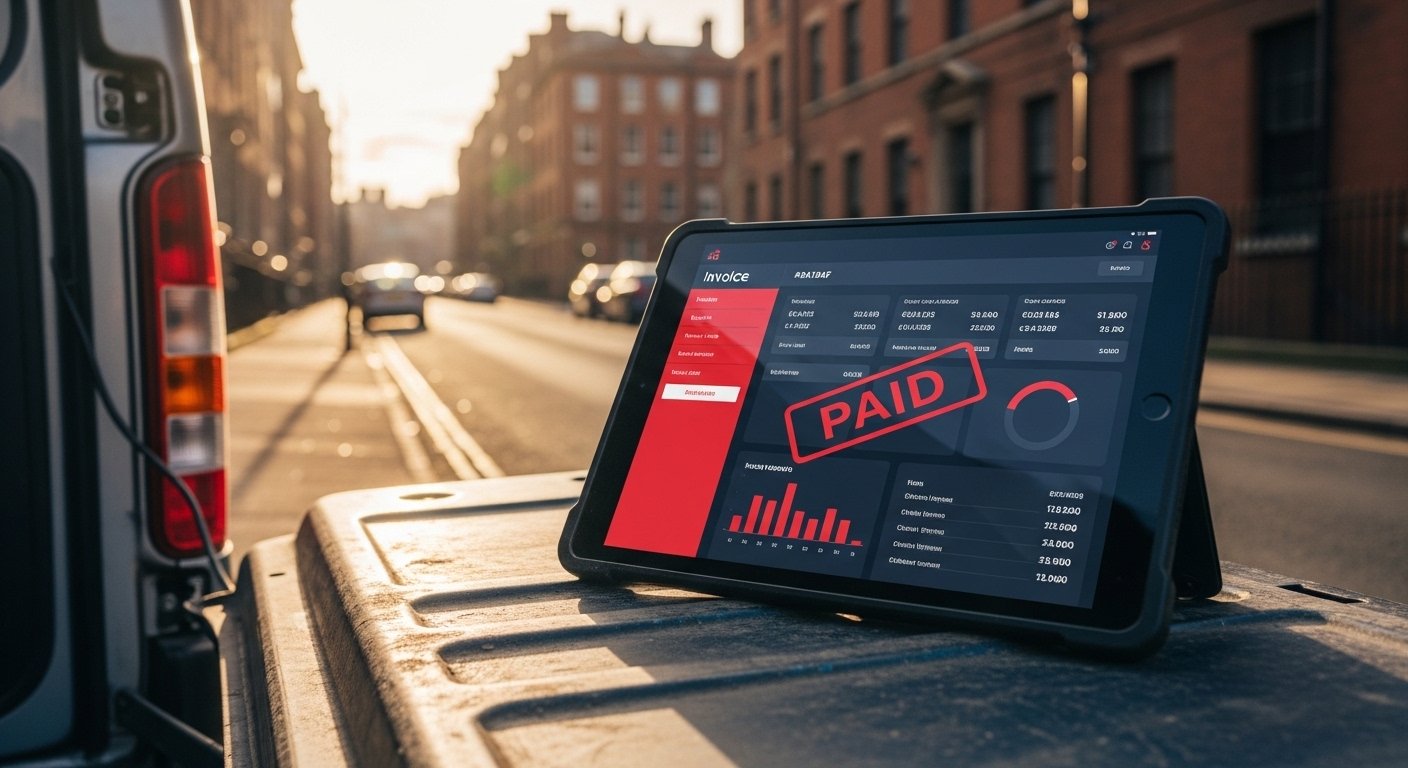
Furthermore, job management tools simplify operations. Tools like TradeMate or ToolTime manage your scheduling, material costs, and certificates. No more digging through a cluttered glovebox for gas safety records or landlord certificates. You can access client job histories, photos, and notes in seconds. This organization saves valuable time. Crucially, it builds massive client trust. It demonstrates professionalism; you respect their time as much as your own. To a customer in Crosby or Woolton, a digitally organized tradesman implies quality work. They expect no cut corners on the job.
The Perils of “Bad” Digital: Navigating the Social Media Minefield
The Algorithm’s Demands: Why “Free Marketing” Isn’t Free
Now, consider the “Bad” Digital. The trap is believing a Facebook Page serves as a marketing strategy. “Gurus” often claim social media provides “free marketing.” This might have held true a decade ago. However, in our current 2026 landscape, it’s a falsehood. Over the last few years, “organic reach”—the number of people seeing your posts for free—plummeted to single digits. You might have 500 followers on your business page. If you post a stunning loft conversion, perhaps only 20 followers will see it. You must pay Facebook to show it to the rest.
These platforms fundamentally aim to make you pay. They want you to buy “Boosted Posts” and ads. Moreover, the “Algorithm” acts as a demanding boss. It constantly seeks your attention. A nice photo of a plastered wall is not enough. It craves “Reels,” video content, and for you to become a content creator. This pressure forces busy tradesmen into amateur video editing. Without it, visibility dwindles. It’s an exhausting game. Most people eventually lose because they lack the necessary time. You spent years mastering your trade, not becoming a filmmaker.
The review system also presents “two-way intimidation.” We live in an era where some customers use the threat of a bad review for discounts. They often do this before the job finishes. Conversely, some tradesmen feel pressure to “buy” five-star reviews. Others pressure customers to leave reviews before the grout dries. This creates a minefield, leading to burnout and frustration. The solution is not to play the social media game harder. Instead, change the entire game. Take control of where potential customers find you.
Reclaiming Your Digital Turf: The “Own Your Patch” Strategy
Here’s our most important advice for any Liverpool business in 2026: Don’t build your house on rented land. Your Facebook page, Instagram profile, or Checkatrade listing often feel like rented land. These platforms can change rules, hike fees, or delete your account tomorrow. Then, you’re left with nothing. To truly own your reputation in this city, you need a home base you control. You must own your data and your digital shopfront.
A winning strategy for a local tradesman involves three simple, non-negotiable steps:
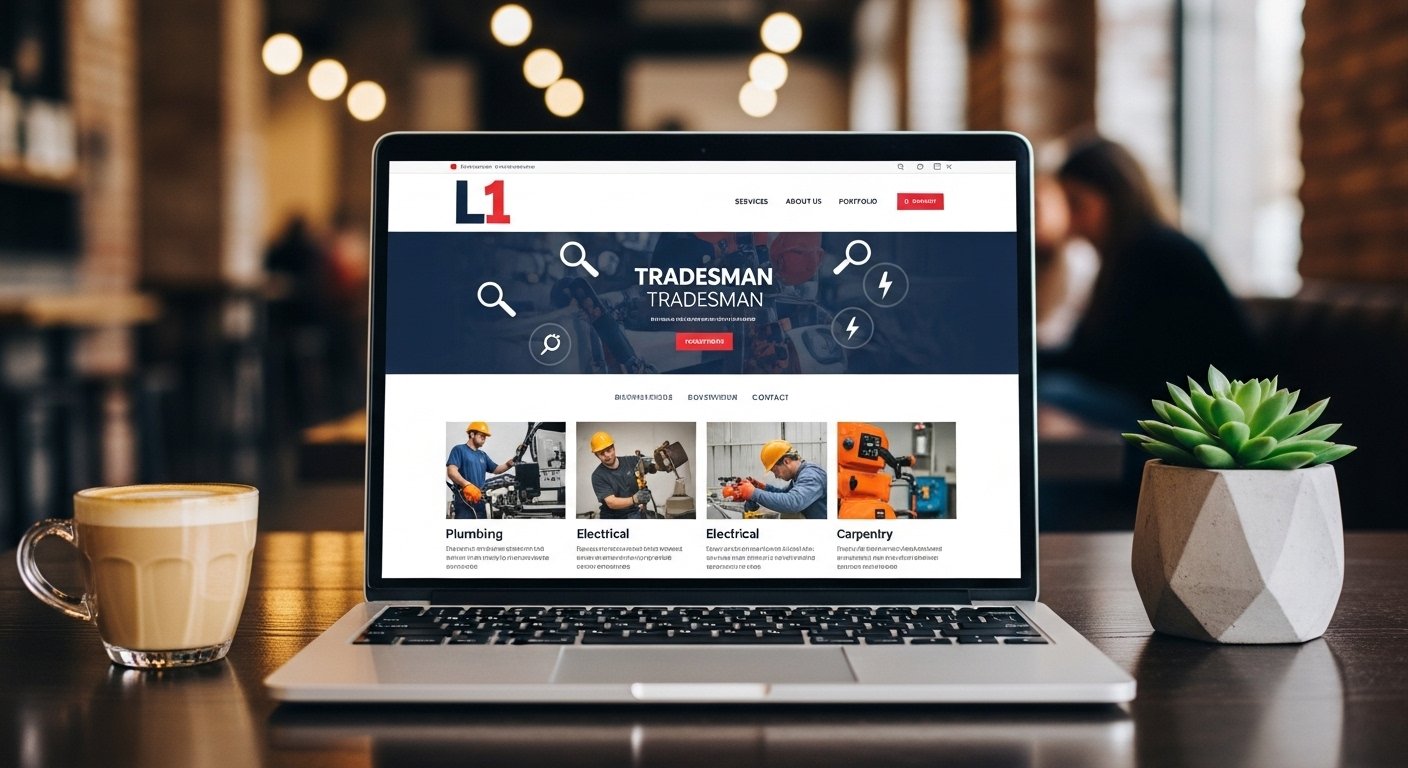
- A Simple, Professional Website: You don’t need fifty pages or complex animations. Instead, aim for a fast, mobile-friendly “shopfront.” It tells people who you are, what you do, and, crucially, proves you are local. When someone Googles “Plumber in Allerton,” they should find your site, not just a generic directory. Your website acts as your 24/7 salesman, never taking a day off.
- Verification and Trust Architecture: Being on vetted platforms like Trustpilot or Checkatrade is key. It’s the digital equivalent of your “Gas Safe” or “NICEIC” badge. Such platforms filter out “cowboys.” They also give customers confidence to book you without hesitation. This transforms “I think he’s okay” into “I know he’s a pro.”
- The Power of the Inbox: This remains the most underrated tool in the tradesman’s kit. Start collecting customer emails. A simple, professional email sent in October can remind clients: “Winter is coming, time to book your boiler service.” This provides more value than a thousand Facebook likes. It creates a direct line to people who already know, like, and trust you. This strategy builds a business not dependent on an algorithm’s whims.
Conclusion: The Modern Digital Tradesman
Today’s most successful Liverpool tradesmen don’t perform TikTok dances in their Transits. They don’t spend all night arguing in Facebook groups. Instead, they have mastered the “Double Shift.” They build, fix, and create with their hands during the day. In the evening, they use smart digital tools. These tools protect their name and automate their admin. They understand that by 2026, being a great sparky or skilled brickie is merely the price of entry. To truly win, you must become the most trusted name in the digital neighborhood.
You possess the skills to build this city. Liverpool, from the Baltic Triangle to the Albert Dock, thrives on hard work, local pride, and authentic connections. Do not let the digital world’s noise tear down what you’ve built with your own two hands. Take control of your online presence. Own your reputation. You will then find the “Double Shift” transforms. It becomes less of a burden and more of a well-oiled machine, working for you even when you’re off-site.
Always remember: need help with SEO or site structure? Grab a coffee on Bold Street. Then, contact L1webtips. We are always here to lend a hand. We’re local, just like you. We speak your language. Moreover, we understand exactly what it takes to make a Liverpool business shine in a crowded digital world. Let’s get to work.